
How rich is Richtersveld nature?
| Mammals on the checklist | 54 |
|---|---|
| Birds on the checklist | 211 (almost 200 seen in the park) |
| Flowering plants on one square kilometre | More than 360, with 68 mm of rain a year |
| Endemic plants | About 30% of the flora |
| Vygie (Mesembryanthemaceae) genera | About 50 of 160 |
| Floristic kingdoms | Two, meeting in a zone 10 to 20 km wide |
Which plants make the Richtersveld special?
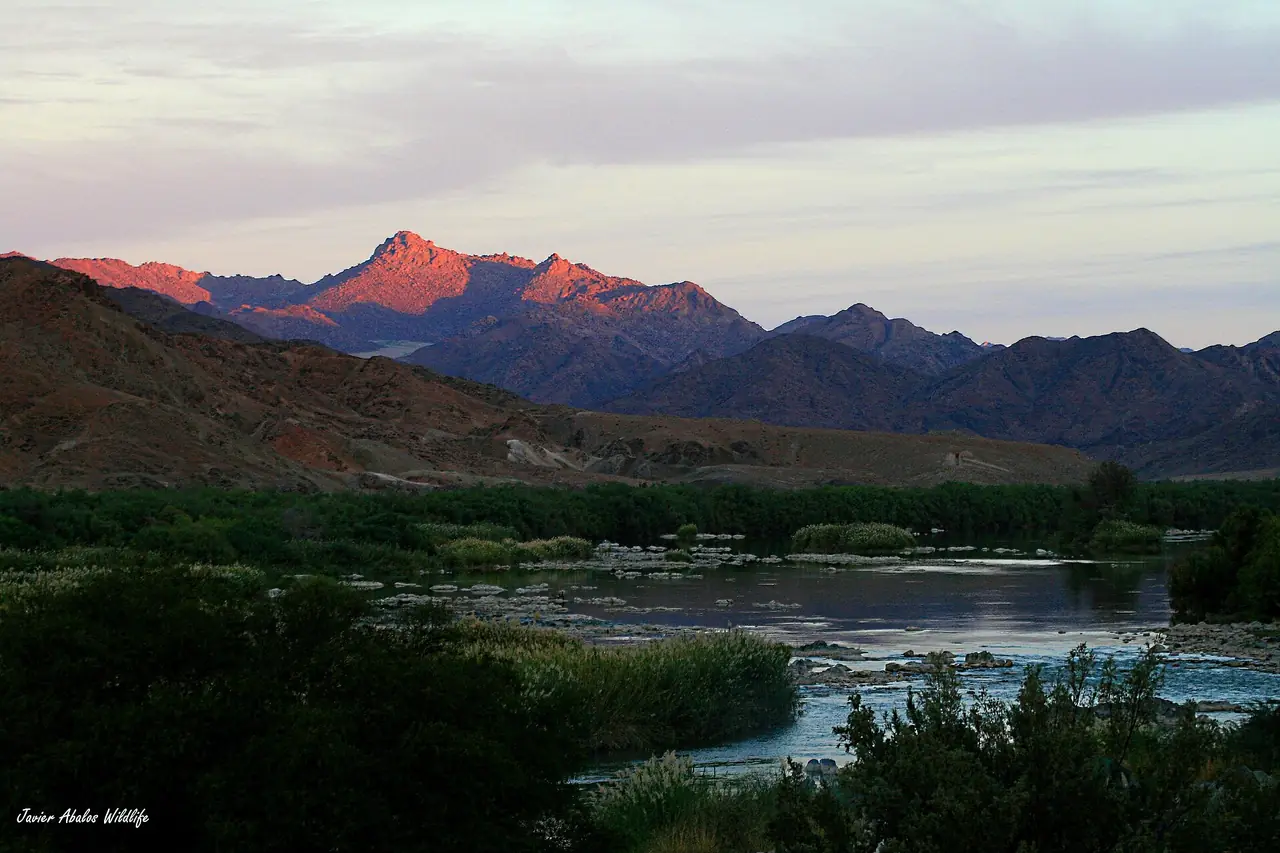
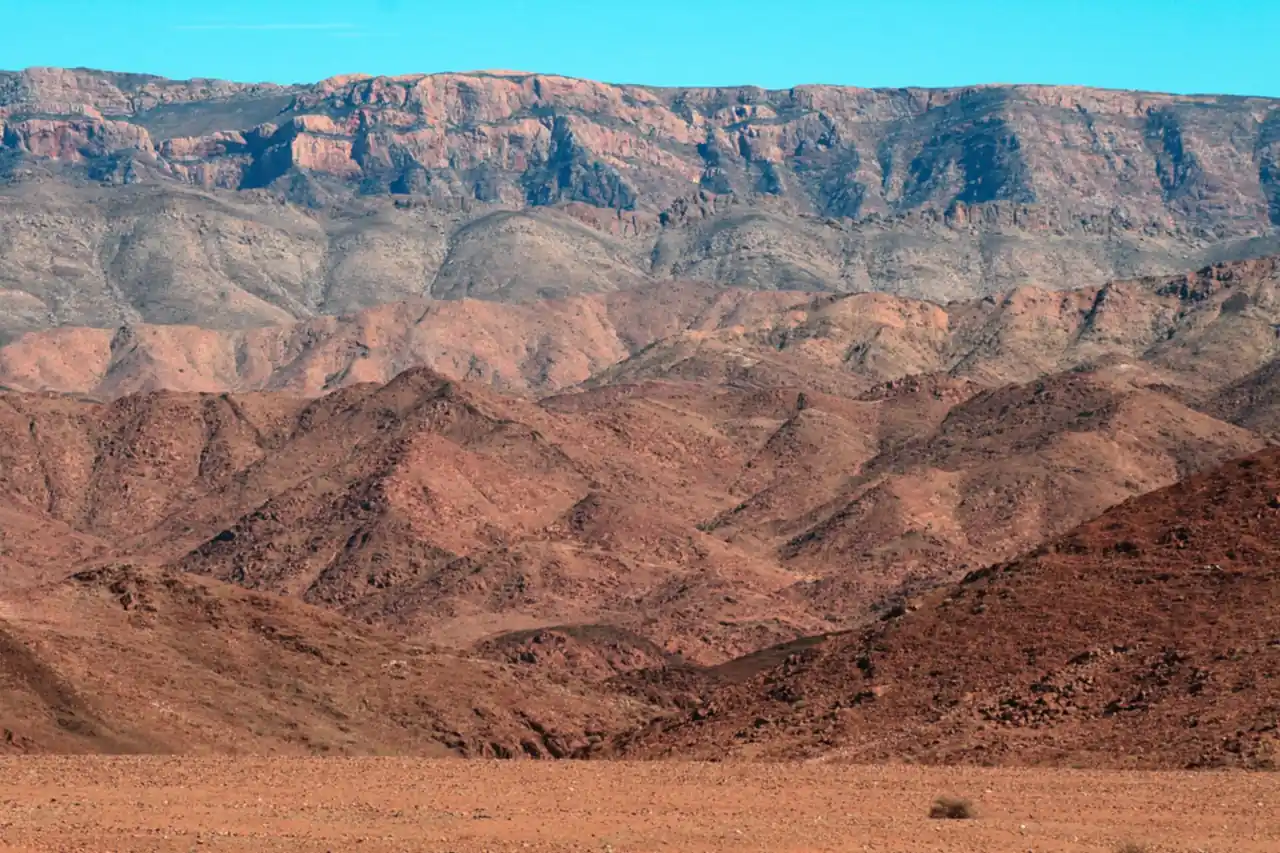
SANParks says the Richtersveld is widely seen as one of the world’s richest succulent areas. About 30% of its plants are endemic, and some grow only in small colonies on the highest peaks. The park has four landscape units: the Orange River and its floodplains, gently rolling plains, hills and rugged mountains.
SANParks links two trees with the park above all: the bastard quiver tree (Aloidendron pillansii) and the halfmens. Maiden’s quiver trees grow near Helskloof. Look out too for stone plants, crassulas and the butter tree, especially in the flower season.


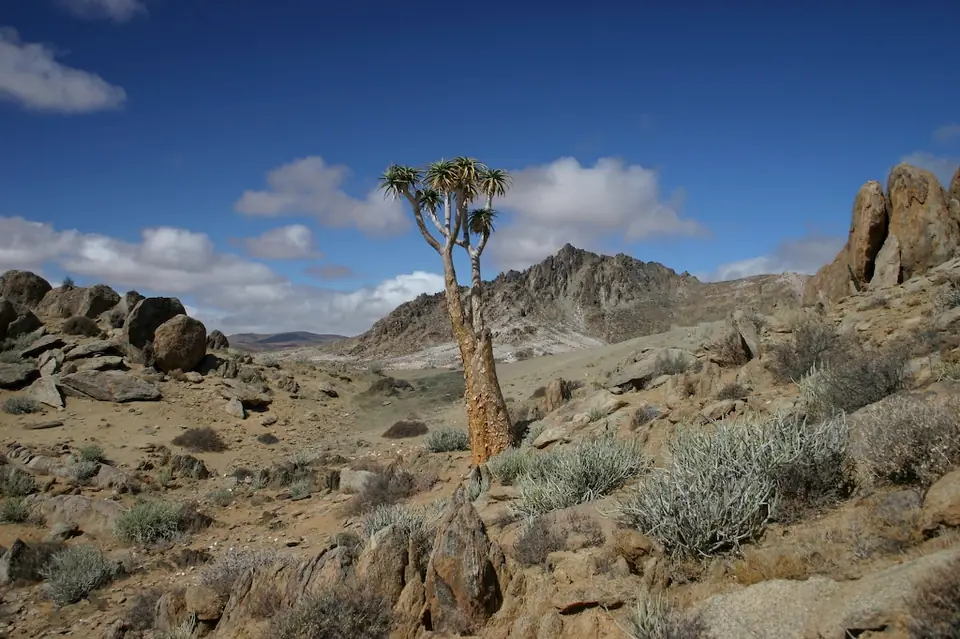
What is the halfmens?
The halfmens (“half-person”), Pachypodium namaquanum, is a succulent with a single cylindrical stem 1.5 to 2.5 m tall, sometimes up to 4 m. A tuft of branches near the top leans north at 20 to 30 degrees. SANParks says the Nama revere these human-like plants as the embodiment of their ancestors, half human and half plant, mourning their ancient home in Namibia. A stand of them, the Halfmensbome, is a SANParks waypoint at S28 08.335 E16 58.973 (28°8′20″S, 16°58′58″E); what3words ///hedge.resettling.arch; directions in Google Maps (opens in a new tab).
Which mammals live in the Richtersveld?
SANParks’ checklist names 54 mammals, many of them small, shy or nocturnal. Larger species include:
- Hartmann’s mountain zebra
- klipspringer
- grey rhebok
- steenbok
- common duiker
- leopard
- caracal
- brown hyena
- aardwolf
- bat-eared fox
- Cape fox
- black-backed jackal
- honey badger
- chacma baboon
- vervet monkey
- rock hyrax
- meerkat
- African clawless otter
Mountain zebra, klipspringer and grey rhebok favour the rocky slopes; otters live along the river. Animals are thinly spread, so binoculars and patience help. The Richtersveld community’s livestock also graze in the park; see the community-owned park. Base yourself at Gannakouriep for mountain species.
Which birds can you see?
SANParks says birders can see almost 200 species in the park; its checklist names 211. Water birds gather along the Orange River near Potjiespram, while eagles and larks work the mountains and plains. Highlights include:
- Verreaux’s eagle
- martial eagle
- booted eagle
- lappet-faced vulture
- Ludwig’s bustard
- kori bustard
- Karoo korhaan
- Namaqua sandgrouse
- goliath heron
- black stork
- African fish eagle
- Karoo eremomela
- cinnamon-breasted warbler
- Layard’s tit-babbler
- pale-winged starling
- dusky sunbird
- Cape eagle-owl
- swallow-tailed bee-eater
What about reptiles and scorpions?

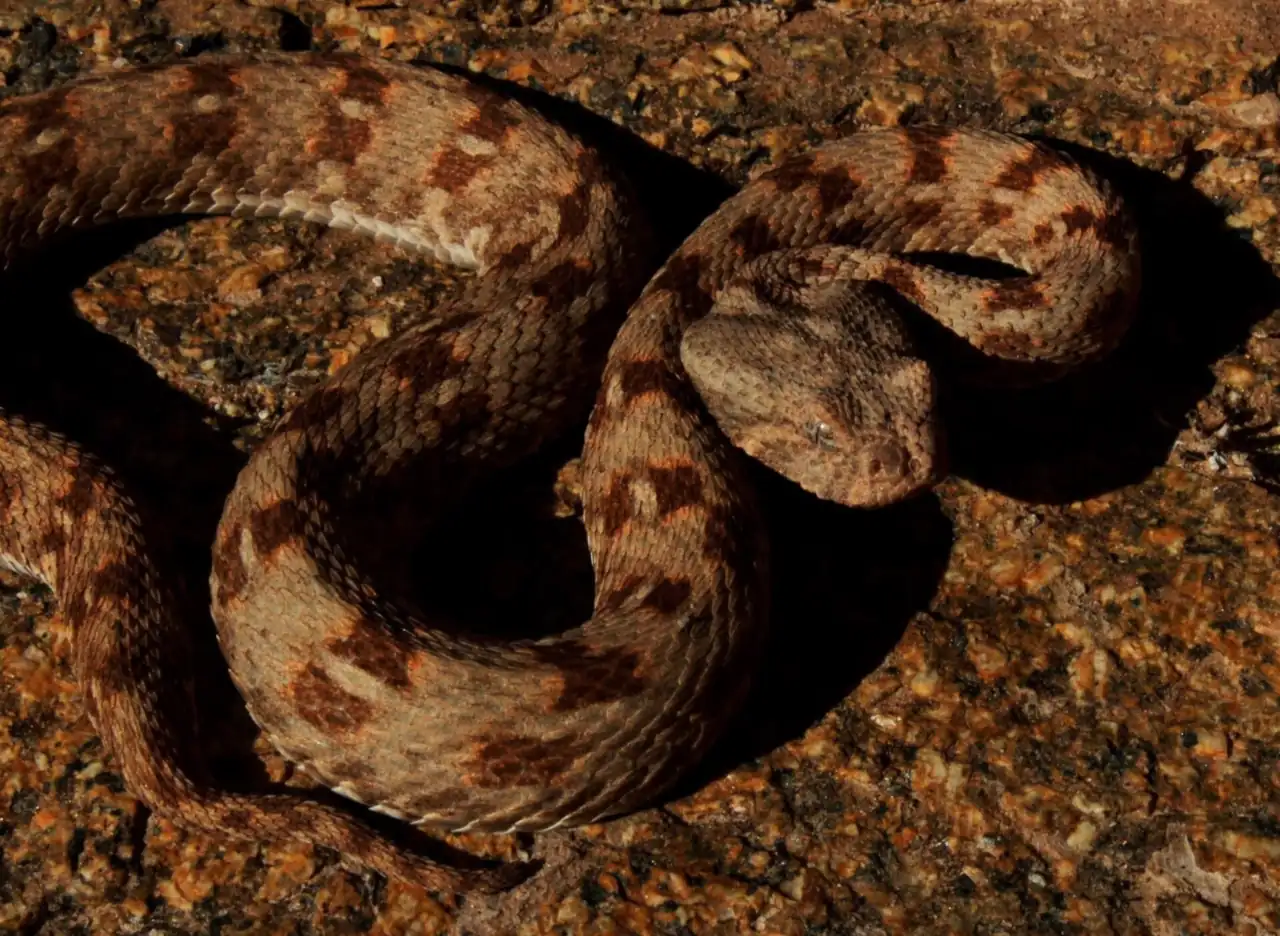
Lizards such as agamas are easy to spot on warm rocks, especially in the heat of the day. Snakes are seldom seen, but watch where you put your hands and feet among rocks. SANParks calls the park ideal scorpion habitat: sleep on a stretcher or in a closed tent, shake out shoes, and carry a torch at night. See visitor tips, camping and the park map.