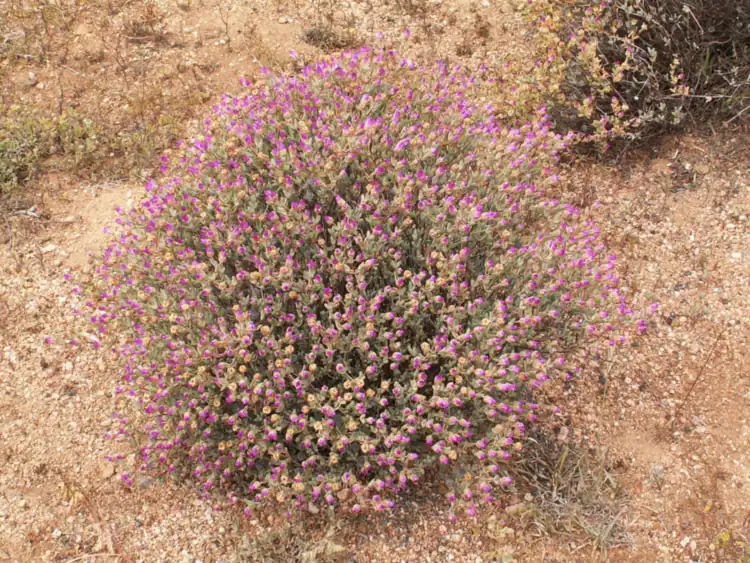
When do the Richtersveld flowers bloom?
SANParks puts the flower season between June and October, depending on good rains; check the weather and park status before you go. Most of the park gets soft winter rain from May to September, while summer rain (October to April) comes in short, patchy thunderstorms. Warm easterly winds around August can dry out the veld and kill the annual plants, so timing varies from year to year.
| Place | Mean a year | Range |
|---|---|---|
| Paradyskloof, south-western mountains | 114 mm | 58–275 mm |
| Tatasberg, interior | 38 mm | 0–163 mm |
Averages for 2000–2016 from SANParks’ climate page.
Why does the Richtersveld have so many plants?
SANParks calls the park a very good example of the succulent Karoo, and says no other desert flora on Earth matches its richness. It spans two floristic kingdoms and two rainfall systems, separated by a transition zone only 10 to 20 km wide.
Fog called the Malmokkie rolls in from the cold Atlantic and is a more reliable source of moisture than rain. About 50 of the 160 genera of the vygie family (Mesembryanthemaceae) occur here, and about 30% of the plants are found nowhere else.

What flowers and plants can you see?
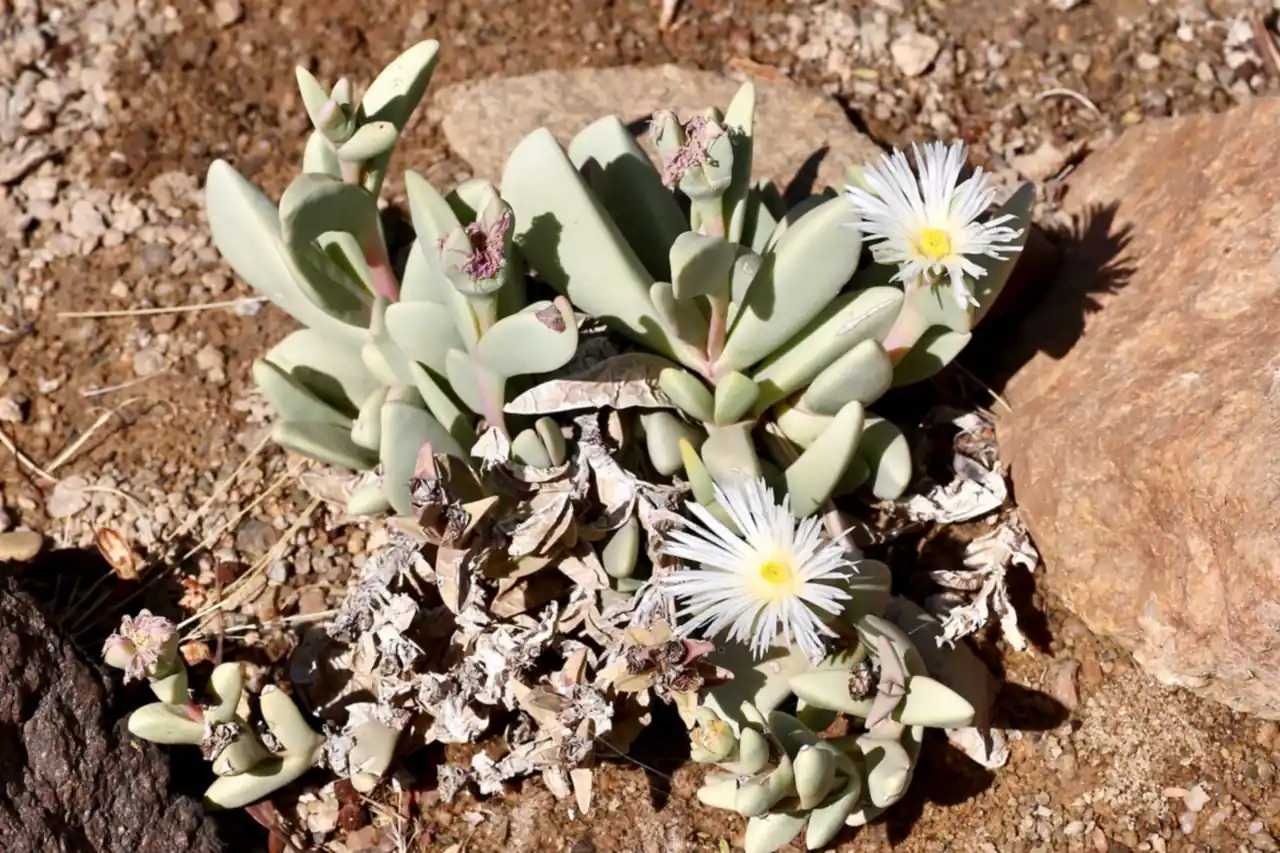

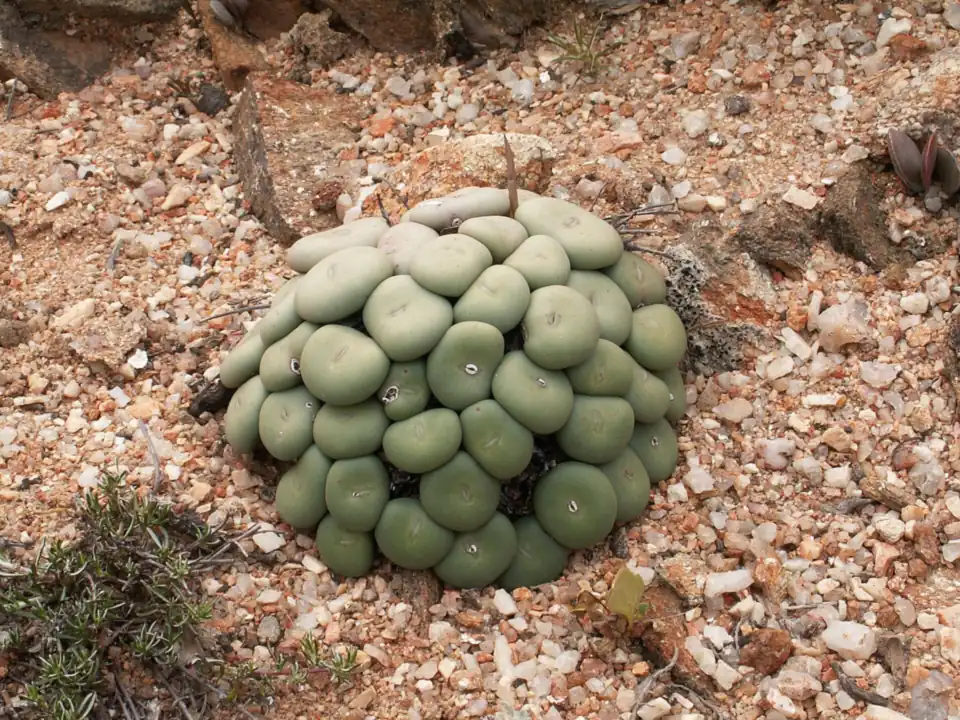
Look for vygies, stone plants (Conophytum and Lithops), crassulas and bulbs on rocky slopes and gravel plains. Some plants, which SANParks calls psammophorous, glue a layer of sand to their leaves as a shield against sandstorms. Read more in plants and wildlife.
Where in the park should you look?
SANParks describes four landscape units, and each has its own plants. Drive slowly and stop often: many of the best plants are only a few centimetres tall.
| Landscape | Look for |
|---|---|
| Orange River and floodplains | Riverine bush and the birds it draws, near Potjiespram and De Hoop |
| Gently rolling plains | Dwarf succulent shrubs and annuals after rain |
| Rolling hills | Vygies, stone plants and quartz-patch specialists |
| Rugged mountains | Halfmens, quiver trees and endemics on the highest peaks |
The western part of the park gets winter rain and Atlantic fog; the east gets patchy summer storms. That split means flowers can appear in one area and not another in the same week.
What are the rules for flower-watchers?
- Do not pick plants or remove seeds: it is an offence.
- Stay on marked routes; driving off them damages fragile plants and is a serious offence. See 4x4 routes.
- Walk carefully on gravel plains, where many tiny succulents grow. Read the park rules.
- Plan ahead: the camps are small. See accommodation and camping.