
What is the |Ai-|Ais/Richtersveld Transfrontier Park?
An international treaty signed on 1 August 2003 joined Namibia’s |Ai-|Ais Hot Springs Game Park and South Africa’s Richtersveld National Park into one transfrontier park, with the Orange River between them. SANParks says one of its main features is the Fish River Canyon, the world’s second-largest canyon, on the Namibian side.
| Treaty | Signed 1 August 2003 |
|---|---|
| South African part | Richtersveld National Park, Northern Cape; about 162,445 ha |
| Namibian part | |Ai-|Ais Hot Springs Game Park, with the Fish River Canyon |
| Border | The Orange (Gariep) River |
| Crossing in the park | Pontoon at Sendelingsdrift (closed for now) |
Who owns and runs the park?
SANParks says the park is owned by the Richtersveld community and managed on a contractual basis with SANParks. It was proclaimed in 1991 as South Africa’s first contractual national park. A SANParks presentation dates the agreement, signed at Kuboes, to 20 July 1991 and the proclamation to 16 August 1991, and notes that livestock farmers may graze in the park.
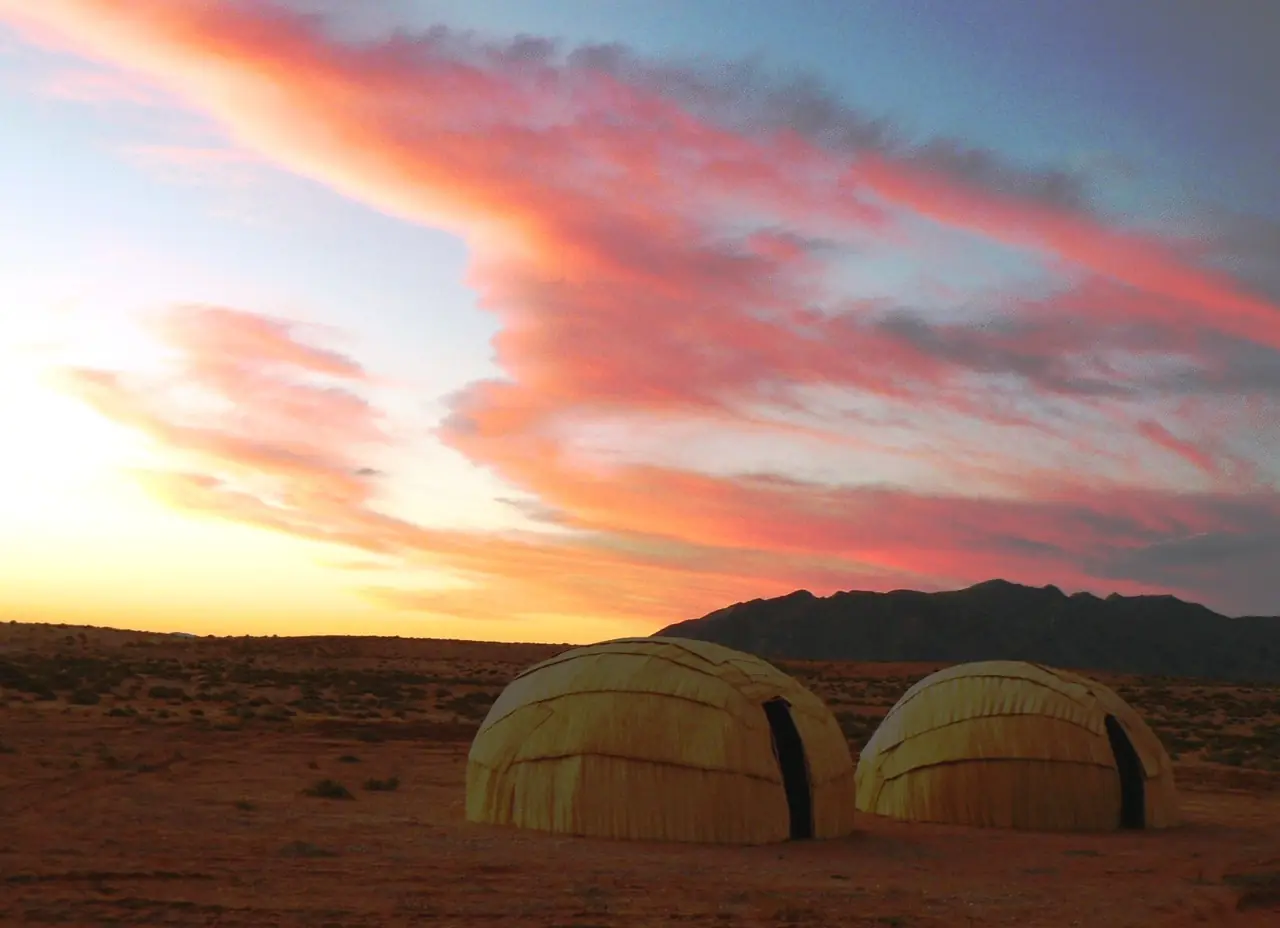
The Nama people of the Richtersveld still move their herds between stock posts and build portable mat houses, called haru oms.
How do you cross into Namibia?
Inside the park, the crossing is the pontoon at Sendelingsdrift, which runs from 08:00 to 16:15 when open. SANParks has closed it for now because of high Orange River levels, until further notice. Until it reopens, travellers between the two sides drive via Alexander Bay, Oranjemund and Rosh Pinah; SANParks warns the last 95 km or so to Sendelingsdrift is corrugated gravel. Carry passports and any vehicle papers needed at a border. See park status and directions.
How do you combine both sides in one trip?
When the pontoon runs, a trip can start on the South African side at Sendelingsdrif Rest Camp, cross the Orange River and continue to the Fish River Canyon and the hot springs at |Ai-|Ais in Namibia. While it is closed, the road around via Alexander Bay and Oranjemund adds a long detour, so most visitors now treat the two sides as separate trips. On the South African side, book SANParks camps such as Tatasberg or the river camp sites; the Namibian side is booked through its own authorities, not SANParks. Remember the Wild Card covers only the South African side, and carry passports for any border crossing.
Is the Richtersveld a World Heritage Site?
Not the national park itself. UNESCO inscribed the Richtersveld Cultural and Botanical Landscape (opens in a new tab) in 2007: about 160,000 ha of communally owned mountain desert just south of the park, listed for the Nama’s transhumance pastoralism. It is a separate community conservancy, reached through Kuboes and Eksteenfontein on the scenic roads to the park. See plants and wildlife.